





The Wandering Village: Definitive Survival Manual
The Wandering Village is a unique city-builder where you establish a civilization on the back of a giant, migratory creature named Onbu. Survival depends not only on managing your village's resources but also on forging a deep, symbiotic relationship with your living foundation. This guide covers all fundamental mechanics, focusing particularly on the changes and new content introduced in the Nomad's Compass and Deep Jungle Echoes updates.
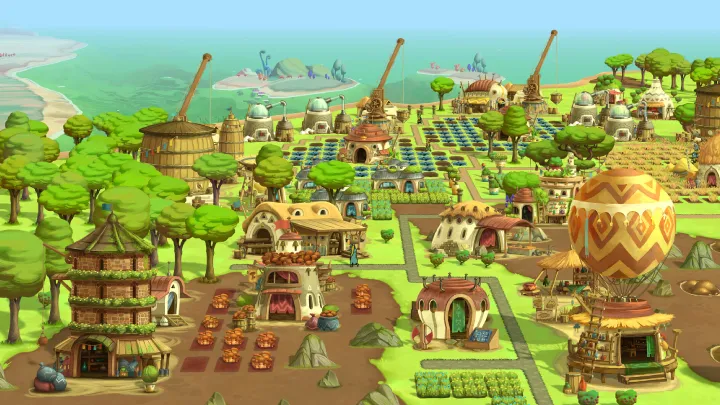
Phase 1: Foundational Setup and Early Survival
The first days on Onbu's back are the most critical. Focus on securing essential resources and establishing a basic infrastructure.
Securing Basic Needs
Your initial goals should center around food, water, and shelter for your starting villagers.
Water and Food Production
- Water Collector: The first building. Must be placed near the sides of Onbu to catch dew or rainwater. In dry biomes, efficiency drops rapidly, requiring the urgent construction of a Dew Collector (advanced building).
- Foreman's Hut: Essential for dispatching Scavenging Teams when Onbu pauses. Prioritize scouting for resources like Stone, Wood, and Seeds.
- Gatherer's Hut: Allows villagers to harvest fungi and moss growing on Onbu's back, providing a baseline food source.
Housing and Building Materials
- Basic Huts: Provide shelter, reducing villager fatigue and boosting morale. Place them in clusters for efficiency.
- Sawmill and Quarry: Convert raw Wood and Stone into Planks and Bricks. Secure a constant supply, as these are the backbone of all further development.
Research and Expansion
The Research Tent is paramount. Your first research priorities should be:
- Air Wells: Highly efficient water production, vital for surviving the Desert Biome.
- Basic Feeding Trellis: The foundational structure for feeding Onbu, critical for maintaining its Mood.
- Communication Hub: Unlocks interaction with Onbu, allowing you to influence its path.
Phase 2: Mastering Onbu Care (Nomad's Compass Update)
The health and behavior of Onbu are now deeply complex, moving beyond simple feeding to a nuanced Symbiosis System.
Onbu's Critical Metrics
You must monitor two interrelated bars that govern Onbu's behavior: Physical Health and Mental State (Mood).
Physical Health Management
- Feeding Trellis: Must be supplied with sufficient food (Fungi, Corn, or Advanced Feed) to maintain its health. Insufficient feeding leads to Slowing Down and eventually, illness.
- Biome Hazards: Onbu is vulnerable to biome-specific afflictions:
- Fungal Infections (Jungle): Contracted in humid, spore-filled zones. Requires the Ailment Clinic and Antifungal Medicine (made from processed Jungle resources) for treatment.
- Desert Ailments (Dehydration/Heatstroke): Requires the Cooling Station attachment and constant access to clean water.
- Pollution: Excessive dumping of waste (unprocessed sewage) on Onbu’s back will gradually decrease its health. Build a Decontamination Plant to process waste cleanly.
Mental State (Mood)
- Communication Hub: Regularly send Guidance Task Teams from this hub to interact with Onbu, even if not guiding. Simple petting and cleaning boost Mood.
- Trust Levels: High Mood builds Trust. High Trust is essential for successful Guidance attempts and prevents erratic behaviors.
- Risk: The Shake Off: If Mood drops too low, Onbu may Shake Off poorly secured structures, causing massive, permanent damage to your village. Ensure crucial buildings are built on Reinforced Foundations (advanced tech).
Strategic Guidance
Guiding Onbu is no longer instant. It is a calculated risk based on Trust.
- Set Direction: Use the Communication Hub to set a preferred path (e.g., towards a Forest or away from a Scorched area).
- Dispatch Team: A Guidance Task Team attempts to influence Onbu. Success depends on the current Trust Level, the difference between the desired path and Onbu's natural inclination, and the presence of an Onbu Whisperer (Villager Role).
- Anticipation: Due to the time delay and chance of failure, you must attempt guidance several hours before Onbu reaches a biome border.
Phase 3: Biome Specialization and Advanced Tech
As Onbu travels, you will encounter diverse biomes demanding specialized technology and materials.
The Deep Jungle Biome (Deep Jungle Echoes Update)
The Jungle is rich but unforgiving, characterized by high humidity and aggressive plant growth.
Jungle-Specific Challenges
- Decay and Maintenance: Humidity causes standard structures (Planks/Bricks) to decay rapidly.
- Solution: Research and use Treated Lumber (made from Jungle Wood) and apply a protective coating of Bio-Resin (a new Jungle resource) to high-priority buildings.
- Toxic Spores: Poisonous fungi are a constant threat to villager and Onbu health.
- Solution: Construct the Fungicide Sprayer attachment and the Jungle Lookout to warn of incoming spore events.
- Resource Focus: Prioritize collecting Bio-Resin for advanced infrastructure and Exotic Fruits for specialized Onbu feed.
The Harsh Desert Biome
The Desert challenges are based on heat, drought, and resource scarcity.
- Water Scarcity: Water Collectors become almost useless.
- Solution: Mass-produce Air Wells (the most efficient desert water source) and research Water Recycling.
- Heat Stress: Uncovered villagers and crops suffer from heatstroke.
- Solution: Research Underground Farming and construct Cooling Stations powered by wind or solar energy.
- Scorched Earth: Areas of Onbu's back that suffer damage from sun and heat cannot grow Fungi or Moss, forcing reliance on advanced farming.
The Nomad's Compass Infrastructure
Invest in new facilities for high-level efficiency:
- Training Hall: Unlocks Villager Specialization. Train Master Scavengers for higher resource yield and Master Builders for faster construction.
- Advanced Storage: Upgrade standard storage to Secure Vaults to protect resources during a potential Onbu Shake Off event.
- Emergency Buffer System: Designate specific storage to hold emergency food/water reserves. These resources are locked until a critical shortage triggers an automated release, providing a life-saving grace period.
Phase 4: Villager Management and Morale
A successful village relies on happy, specialized, and healthy villagers.
Health and Illness
- Sanitation: Build Latrines and eventually the Sewage System to prevent the spread of diseases (e.g., Vomiting Sickness).
- Treatment: The Clinic treats basic illnesses. Advanced illnesses (like Fungal Infection) require the Ailment Clinic and specialized medicine.
- Malnutrition: Prevent this by ensuring a diverse food supply (not just Fungi). Research Advanced Kitchens for higher-morale meals.
Morale and Loyalty
High Morale directly translates to higher productivity and prevents villagers from leaving.
- Feasts and Events: Periodically host a Feast (requires large food expenditure) to temporarily boost morale across the village.
- Decorations: Place decorative structures like Gardens or Statues around housing clusters to passively increase morale.
- Workload: Use the Priorities Menu to ensure no single villager is overworked for too long, as this severely impacts Mood.
Expansion Strategy
- Verticality: Use Stairs and Bridges to build on the vertical surfaces of Onbu's spikes and side plates. This maximizes usable space and provides access to better Scavenging vantage points.
- Modularity: Design your village in self-contained, modular blocks (e.g., a "Food Block" with farms, water, and kitchens) so that if one area is damaged by Onbu or environmental hazards, the entire village does not collapse.
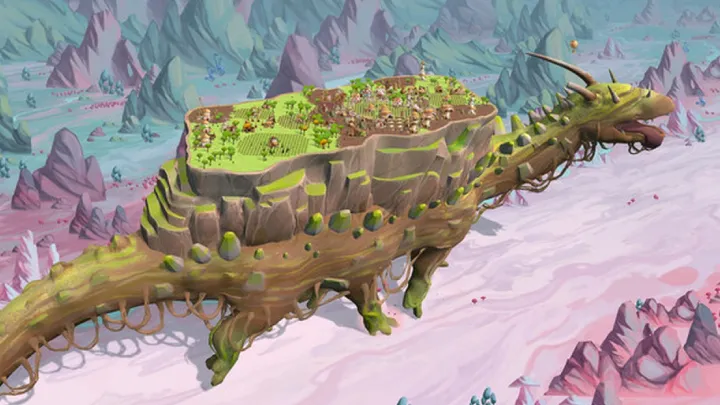
By mastering the delicate balance between your village's needs and Onbu's well-being, you can guide your civilization toward stability and prosperity, enduring the long, beautiful, and perilous journey across the vast world.