





At first glance, Stardew Valley is widely celebrated as a relaxing farming simulation—a peaceful escape where players can grow crops, build relationships, and live a slower, more intentional life. Its pixel art, soothing music, and open-ended gameplay design create the impression of complete freedom. However, beneath this calming exterior lies a subtle but powerful issue that many players encounter over time: the gradual transformation of relaxation into optimization pressure.
This article explores a specific and often overlooked problem in Stardew Valley—the way time management, seasonal constraints, and efficiency-driven systems slowly push players toward rigid, optimized playstyles. What begins as a gentle sandbox experience can evolve into a cycle of urgency, planning, and even stress. By examining this issue across different stages of gameplay, we can better understand how a game designed for relaxation can unintentionally create pressure.
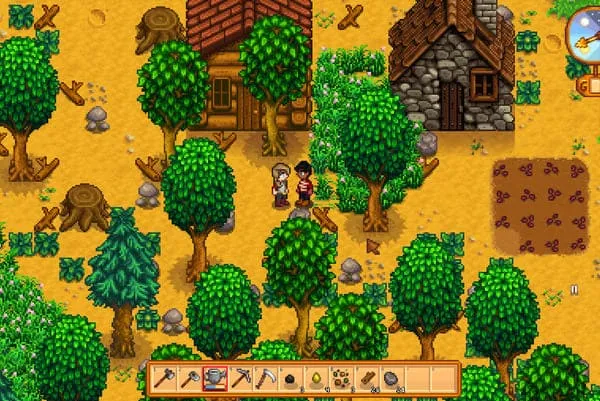
Early Spring: The Illusion of Infinite Freedom
In the early stages of the game, players arrive in Pelican Town with almost no pressure. There are no strict goals, no urgent deadlines, and no real punishment for inefficiency. You can plant crops, walk around, talk to villagers, or simply let the day pass.
This sense of freedom is carefully designed. Limited stamina and small-scale farming naturally slow things down, encouraging exploration rather than optimization. At this point, the game feels like a sandbox where players define their own pace and priorities.
Mid-Spring: The Introduction of Time Awareness
As players become familiar with the mechanics, they start to notice that time matters. Days are short, crops take several days to grow, and shops close at specific hours.
This realization introduces a subtle shift. Players begin planning their daily routines—watering crops early, scheduling trips into town, and managing energy efficiently. Time is no longer just part of the environment; it becomes a resource to manage.
Summer: Efficiency Begins to Dominate
By summer, players usually have a stable farm and start thinking about profit. Crop selection becomes less about preference and more about efficiency.
High-yield crops begin to dominate decision-making. Instead of planting what looks nice or feels fun, players focus on maximizing income. Daily routines become structured, and actions are chosen based on return value rather than enjoyment.
Fall: The Pressure of Seasonal Deadlines
Each season lasts only 28 days, and this limitation becomes more apparent in fall. Crops must be planted at the right time, or they will not grow before the season ends.
Mistakes carry real consequences. Missing a planting window can waste valuable time and resources. This introduces a sense of urgency that contrasts with the game’s otherwise calm atmosphere.
Year One Completion: The Community Center Effect
The Community Center adds a layer of long-term planning. While technically optional, it encourages players to collect specific items across seasons.
This creates an implicit timeline. Missing a seasonal item can delay completion for an entire in-game year. As a result, players begin planning far ahead, turning what was once casual play into strategic scheduling.
Year Two: Routine Becomes Obligation
By the second year, many players fall into consistent daily routines. These often include farming, tending animals, processing goods, and interacting with the town.
While efficient, these routines reduce spontaneity. Players may feel locked into repeating the same actions every day, as deviating from the routine could reduce productivity.
Late Game: Expansion and Hidden Pressure
As the farm grows larger and more complex, new systems come into play. Sprinklers automate watering, but production chains and resource management become more demanding.
Managing a large farm requires careful coordination. Players must balance crops, machines, animals, and time. Even though automation reduces manual work, it increases the need for planning and optimization.
The Social System: Relationships as Tasks
Building relationships with villagers is one of the game’s core features. However, over time, players often learn the most efficient ways to gain friendship points.
Instead of interacting naturally, players may follow optimized gifting schedules. Relationships shift from emotional connections to tasks that must be completed for rewards.
The Mine and Combat: Efficiency Over Exploration
The mines introduce combat and exploration, but they are also affected by time pressure. Players often aim to progress as far as possible in a single day.
This turns exploration into optimization. Instead of enjoying discovery, players focus on efficiency—descending quickly, maximizing resources, and minimizing wasted time.
Burnout Phase: When Relaxation Fades
After extended play, some players begin to feel burnout. The constant focus on efficiency can make the game feel less like relaxation and more like responsibility.
Common signs include feeling rushed, avoiding non-optimal activities, and losing enjoyment in daily routines. The original charm of the game starts to fade.
Reclaiming Freedom: Playing Differently
Some players counter this pressure by intentionally changing how they play. They stop focusing on optimization and instead prioritize enjoyment.
This might include farming for aesthetics, building relationships without strategy, or simply exploring without goals. These choices restore the sense of freedom that defines the game’s early stages.
Conclusion
Stardew Valley is a beautifully designed experience that offers both depth and relaxation. However, its underlying systems—time limits, seasonal cycles, and reward structures—can gradually push players toward optimization-focused gameplay.
This creates a tension between freedom and efficiency. While the game allows for open-ended play, its mechanics often reward structured, optimized behavior. Recognizing this dynamic allows players to make conscious choices about how they engage with the game.
Ultimately, Stardew Valley is at its best when players embrace its flexibility rather than its efficiency. By stepping away from optimization, players can rediscover the calm and creativity that make the game special.