.webp)





Risk of Rain 2 is a game built on chaos, speed, and exponential growth. Every run is a race against time, where enemies scale endlessly and players scramble to collect items fast enough to keep up. But beneath the adrenaline lies a long‑standing structural issue: the game’s scaling system — the way enemies grow stronger, items synergize, and time pressure shapes decision‑making — creates a progression curve that is thrilling, but also deeply flawed. This article explores the scaling problem in Risk of Rain 2, tracing how it emerged, how it affects gameplay, and why it remains one of the most debated aspects of the game.
1. The Early Game: When Scaling Feels Fair
The early minutes of a Risk of Rain 2 run are deceptively balanced. Enemies spawn slowly, their health pools are manageable, and players have enough breathing room to explore the map. This phase is where the game feels most controlled — a moment of calm before the storm.
During this time, the scaling system works as intended. Players can defeat enemies efficiently, gather a few items, and begin forming the foundation of their build. The time pressure is present but not overwhelming. The game encourages exploration, experimentation, and adaptation.
Early Game Strengths
- Manageable enemy health
- Reasonable spawn rates
- Time pressure that motivates without overwhelming
The Hidden Shift
This balance is temporary. The scaling curve soon accelerates beyond what most players expect.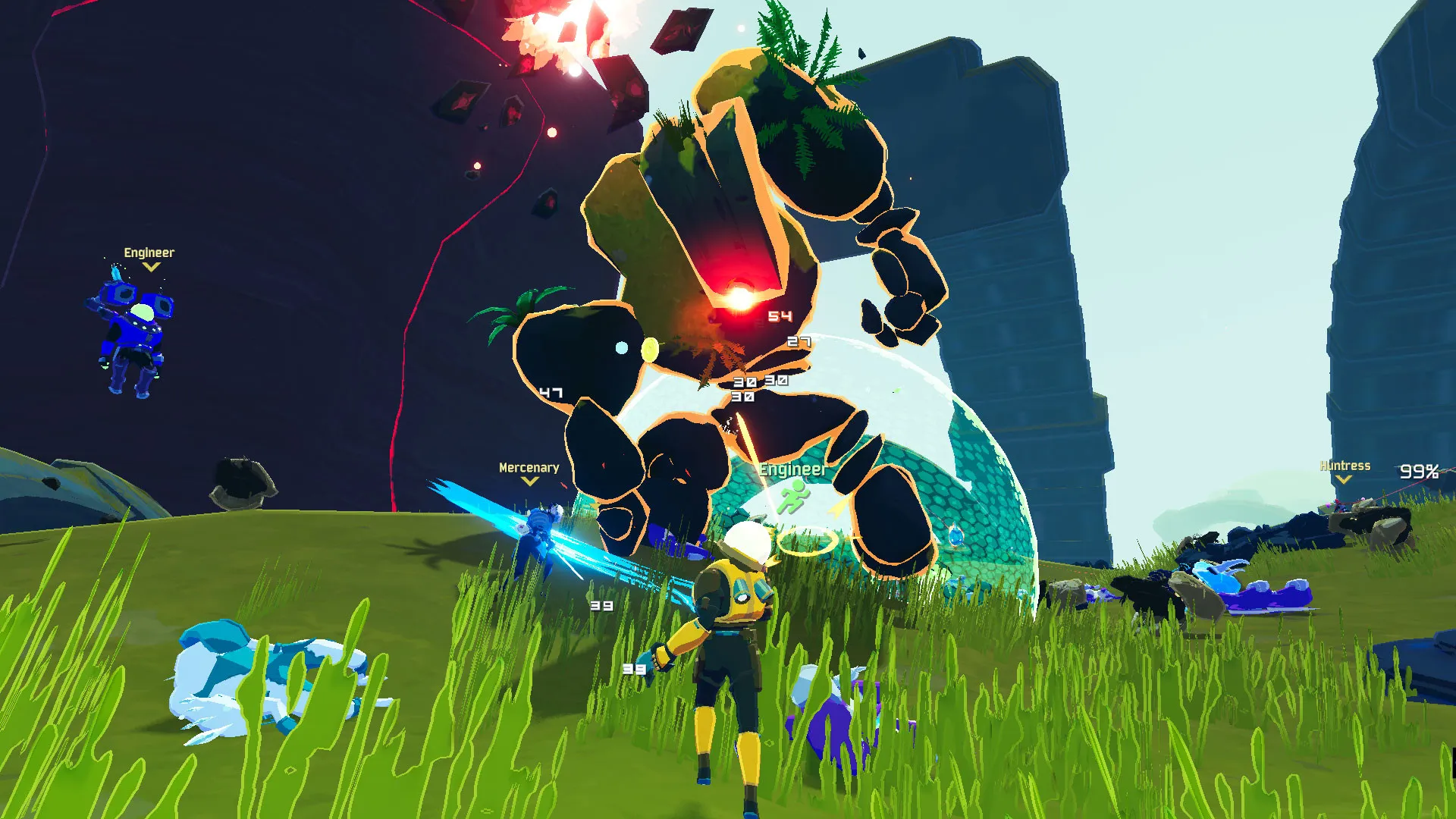
2. The First Spike: When Time Pressure Becomes a Threat
Around the five‑minute mark, the game’s scaling begins to accelerate. Enemies spawn more frequently, their health increases, and elite variants appear more often. This is the first moment when players feel the pressure to move faster.
The issue here is not the difficulty itself, but the way time pressure forces players into a specific playstyle. Instead of exploring or experimenting, players must rush from chest to chest, hoping to gather enough items before the next spike. The game subtly shifts from exploration to speedrunning.
Symptoms of the First Spike
- Players begin skipping chests
- Teleporter events become mandatory ASAP
- Mistakes become more punishing
Why This Matters
The game’s identity shifts from “roguelike exploration” to “race against exponential math.”
3. Item Snowballing: The Core of the Scaling Problem
Risk of Rain 2’s item system is brilliant, but also dangerous. Items stack exponentially, creating powerful synergies that can trivialize entire stages. But the flip side is equally true: without enough items, players fall behind the scaling curve and become overwhelmed.
This creates a snowball effect. Players who get lucky early become unstoppable, while those who don’t are punished harshly. The scaling system amplifies this disparity, making early RNG disproportionately important.
Examples of Snowballing
- On‑hit builds scaling infinitely with attack speed
- Crit builds becoming unstoppable with a few key items
- Survivability builds becoming immortal with enough regen
The RNG Problem
The game’s scaling punishes bad luck more than bad decisions.
4. The Teleporter Dilemma: Stay or Go?
The teleporter event is the centerpiece of each stage, but it also highlights the scaling issue. Players must decide whether to farm enemies for items or activate the teleporter early to avoid falling behind the scaling curve.
This creates a paradox: farming makes you stronger, but farming also increases difficulty. The optimal strategy becomes a delicate balance between risk and reward — but the scaling system often punishes players for taking their time.
Teleporter Dilemma Factors
- Enemy spawn rate
- Item density on the map
- Player build strength
Why This Matters
The teleporter becomes a symbol of the game’s core tension: speed vs. power.
5. Mid‑Game Chaos: When Scaling Outpaces Skill
By the third or fourth stage, the game’s scaling becomes aggressive. Enemies spawn in large groups, elites appear constantly, and bosses can overwhelm players instantly. This is where the scaling problem becomes most apparent.
Players who have not built enough momentum struggle to survive. Even skilled players can be overwhelmed if their item luck has been poor. The game’s difficulty becomes less about mechanical skill and more about whether the scaling curve has been respected.
Mid‑Game Pain Points
- Elite enemies with oppressive abilities
- Bosses spawning in multiples
- Damage spikes that feel unfair
The Skill Ceiling Issue
Skill matters, but scaling often matters more.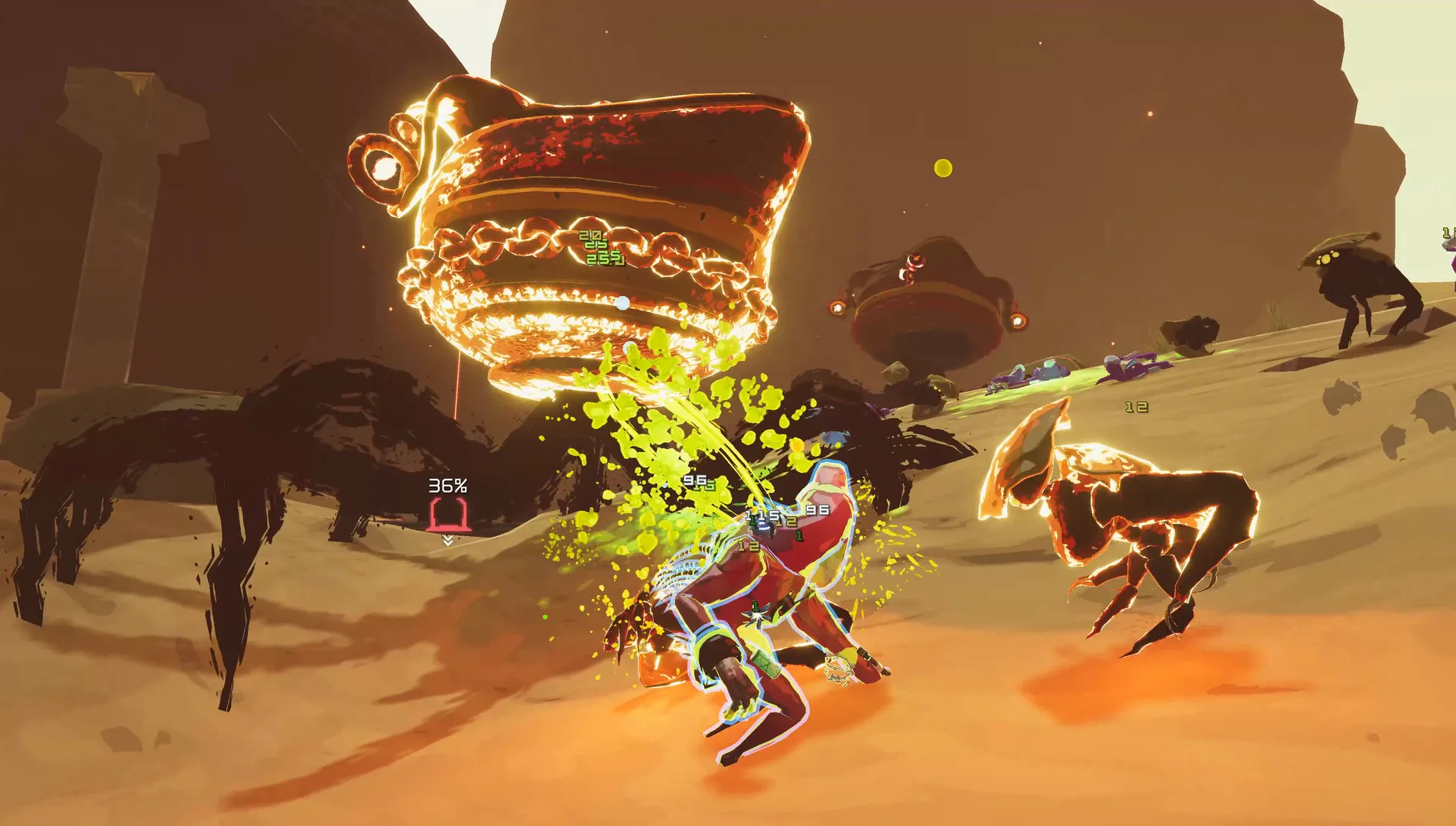
6. Late‑Game Exponential Madness
Late‑game scaling in Risk of Rain 2 is exponential, not linear. Enemy health and damage skyrocket, and elite modifiers stack in ways that create absurdly powerful enemies. This is where the game becomes chaotic — sometimes thrilling, sometimes frustrating.
At this point, only the strongest builds can survive. Players rely heavily on specific items, synergies, and mobility tools. The scaling system forces players into narrow build paths, reducing creativity and experimentation.
Late‑Game Challenges
- One‑shot mechanics
- Overlapping elite modifiers
- Bosses spawning endlessly
The Build Narrowing Problem
Scaling pushes players toward meta builds and away from fun or experimental ones.
7. The Void Fields: Scaling in a Pressure Cooker
The Void Fields is a unique environment where scaling becomes even more punishing. Players must survive waves of enemies while trapped in small zones with limited mobility. The scaling curve here is brutal, and even strong builds can crumble.
The issue is that Void Fields amplifies the worst aspects of scaling: overwhelming enemy density, oppressive elite modifiers, and limited healing opportunities. It becomes a test not of skill, but of whether your build can withstand exponential scaling in a confined space.
Void Fields Pain Points
- No natural healing
- High enemy density
- Punishing elite combinations
Why Void Fields Matters
It exposes the flaws in the scaling system more clearly than any other zone.
8. The Mithrix Problem: Scaling Meets Hard Mechanics
Mithrix, the final boss, is a mechanical challenge layered on top of the scaling system. His fight is designed to test player skill, but scaling often overshadows the mechanics. If players arrive underpowered, the fight becomes nearly impossible.
The most controversial part of the fight is Phase 4, where Mithrix steals the player’s items. This mechanic interacts poorly with the scaling system. Players who rely on snowballing suddenly lose their power, while scaling continues to push enemy strength upward.
Mithrix Issues
- Phase 4 punishes snowball builds
- Scaling makes the fight inconsistent
- Underpowered builds stand no chance
The Design Conflict
Skill‑based boss mechanics clash with scaling‑based progression.
9. Multiplayer Scaling: Chaos Times Four
Multiplayer scaling introduces additional complexity. Enemy health and damage scale with player count, but item drops do not scale proportionally. This creates tension within teams, as players compete for limited resources while facing stronger enemies.
The scaling system becomes even more punishing in multiplayer. If one player falls behind, they become a liability. If one player snowballs, they carry the team. The disparity becomes more visible, and the scaling curve becomes harder to manage.
Multiplayer Pain Points
- Uneven item distribution
- Stronger enemies without stronger players
- Increased chaos and unpredictability
The Co‑Op Paradox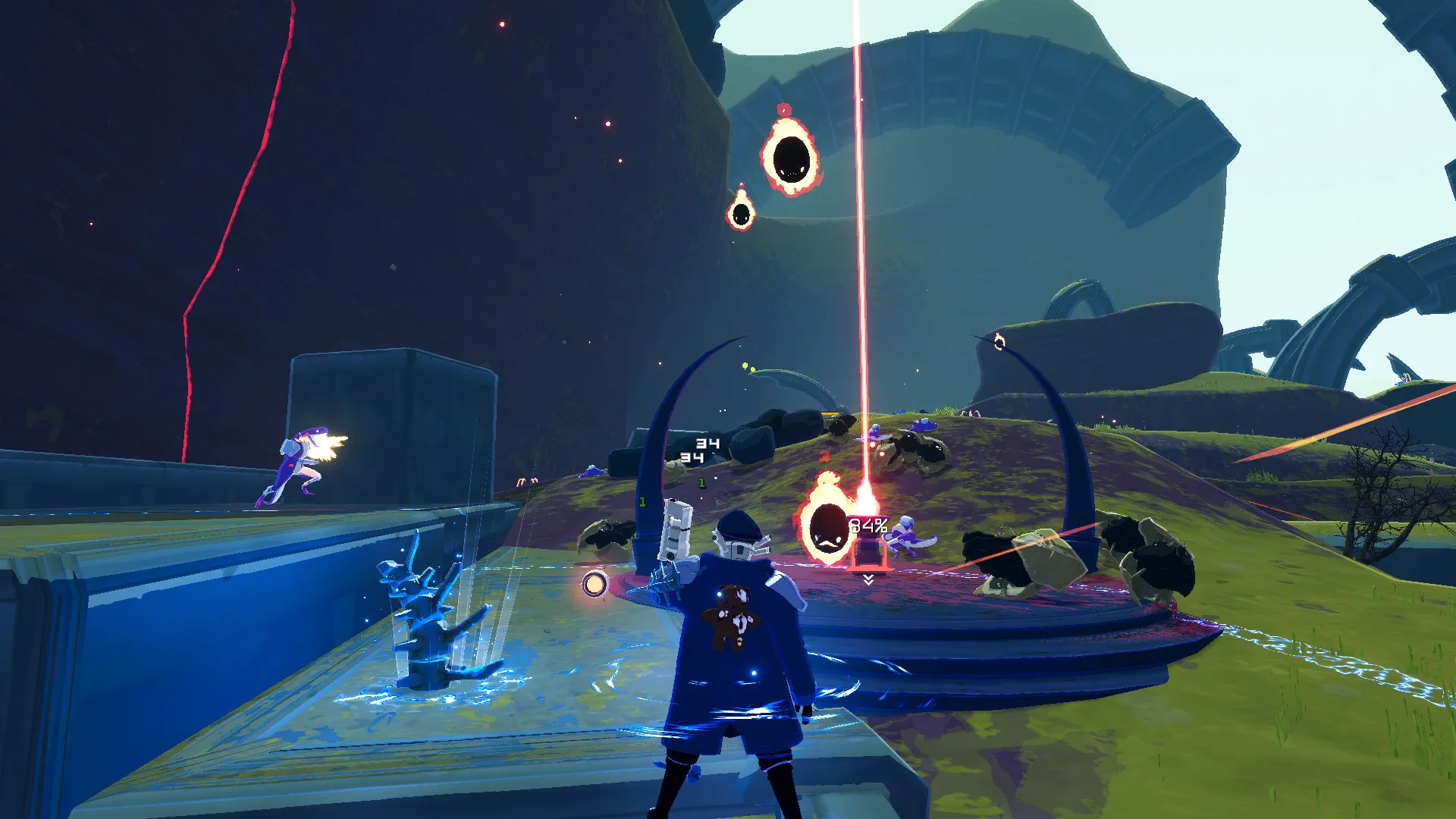
More players should make the game easier, but scaling often makes it harder.
10. The Future of Scaling: Can It Be Fixed?
Risk of Rain 2’s scaling system is both its greatest strength and its greatest weakness. It creates tension, excitement, and chaos — but it also creates frustration, imbalance, and inconsistency. Fixing the scaling problem requires a delicate balance between challenge and fairness.
Potential improvements include smoothing the scaling curve, reducing the impact of early RNG, and providing alternative progression paths that reward skill over luck. The game’s identity is built on exponential chaos, but that chaos must be controlled to maintain long‑term engagement.
Potential Improvements
- Reduce exponential scaling
- Add skill‑based progression
- Improve item distribution
- Rebalance elite modifiers
A Hopeful Outlook
Risk of Rain 2 has evolved before, and it can evolve again.
Conclusion
Risk of Rain 2’s scaling problem is a complex issue rooted in exponential difficulty, item snowballing, and time pressure. While the system creates thrilling moments, it also creates frustration and imbalance. By understanding how scaling shapes every stage of a run — from early game to final boss — we can appreciate both the brilliance and the flaws of the game’s design. With thoughtful adjustments, the scaling system could become more fair, more flexible, and more rewarding for all players.