Dead Eye’s Hidden Economy in Red Dead Redemption 2: How a Signature Mechanic Quietly Narrows Player Freedom
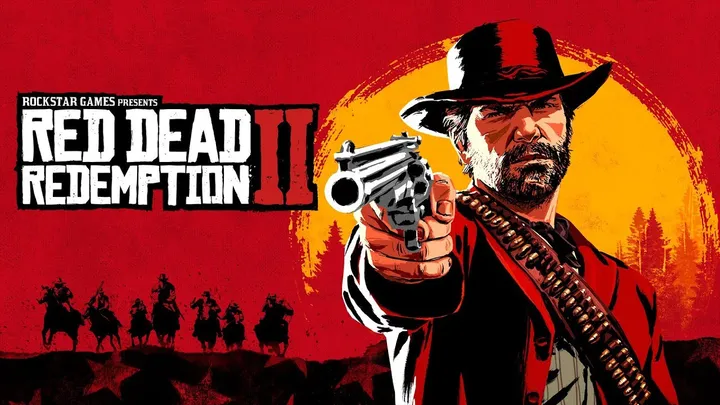
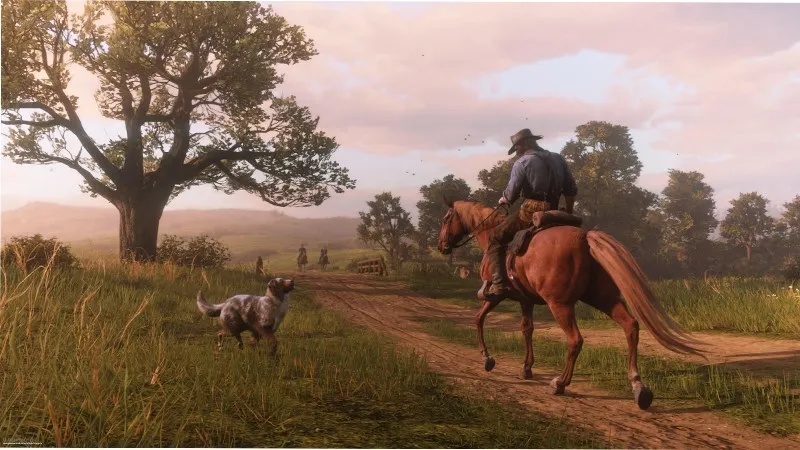
Dead Eye is one of the most celebrated mechanics in Red Dead Redemption 2. Most players view it as a cinematic aiming tool that slows time and allows Arthur Morgan to land precise shots during chaotic gunfights. On the surface, it appears to be a simple combat enhancement designed to make shootouts more dramatic and accessible. However, beneath its stylish presentation lies a more complicated issue that influences nearly every aspect of combat progression.
The problem is not that Dead Eye is too powerful. The problem is that Dead Eye behaves like an economy. It has a limited supply, refill requirements, efficiency considerations, and opportunity costs. As players move through the game's story, they begin making decisions based not only on enemy positions and environmental factors but also on the availability of Dead Eye itself. Over time, many encounters become less about adapting to the battlefield and more about determining when to spend a valuable accuracy resource.
This creates a subtle dependency that many players never consciously recognize. Difficult situations often feel easier when Dead Eye is available and significantly riskier when it is not. As a result, players gradually learn to preserve the mechanic for critical moments rather than develop alternative solutions. What begins as a helpful tool can evolve into the dominant answer for uncertainty.
This article examines a specific issue within Red Dead Redemption 2: how Dead Eye's resource structure, targeting mechanics, mission design, and refill systems encourage a precision-dependency loop that can reduce combat variety and limit emergent gameplay.
The opening chapters introduce Dead Eye as a solution to uncertainty. Early gunfights are relatively simple, but they establish an important behavioral pattern. Whenever combat becomes unpredictable, Dead Eye provides immediate control. The player quickly learns that activating the ability removes much of the risk associated with fast-moving targets and poor positioning.
Rather than encouraging experimentation, the game often rewards the use of Dead Eye whenever pressure increases. Even before players fully understand advanced combat systems, they begin associating success with access to precision. This association becomes the foundation for a larger dependency later in the game.
The earliest lessons in a game often become permanent habits. Because Dead Eye is introduced as a reliable answer to chaos, many players instinctively turn to it whenever encounters become difficult.
Most shooting games reward mechanical improvement through practice. Better aim generally leads to better outcomes. Red Dead Redemption 2 introduces a different dynamic. Accuracy can be enhanced through a consumable resource that players manage throughout gameplay.
The result is a subtle shift in player psychology. Instead of asking, "Can I land this shot?" players increasingly ask, "Should I spend Dead Eye here?" Combat decisions become resource decisions, turning precision into something that can be purchased rather than earned entirely through execution.
Once players begin budgeting Dead Eye, every encounter acquires an economic layer. The mechanic becomes less of a tool and more of a currency.
As the story progresses, Dead Eye becomes more versatile. Improved targeting capabilities and expanded functionality increase its effectiveness. Rather than serving as a backup option, it evolves into a core combat strategy.
This growth creates a balancing problem. The stronger Dead Eye becomes, the more attractive it appears compared to conventional gunplay. Alternative approaches remain available, but they often feel less efficient than simply activating Dead Eye and removing threats immediately.
Players naturally gravitate toward consistent solutions. Because Dead Eye consistently delivers results, it becomes increasingly difficult to ignore.
One of the most overlooked aspects of the mechanic is decay. The resource is temporary, creating urgency whenever it is activated. Although this adds tension, it also changes how players evaluate combat situations.
Instead of reading the battlefield calmly, players often rush decisions to maximize the remaining value of the ability. Enemies become targets to eliminate quickly rather than threats to analyze. The battlefield transforms into a timer.
The pressure generated by resource depletion encourages efficiency over creativity. Players focus on converting Dead Eye into kills rather than exploring alternative tactics.
Many story missions feature waves of enemies, sudden ambushes, or dramatic threat spikes. These moments naturally encourage the use of Dead Eye because the mechanic provides immediate stability.
Over time, players begin predicting when Dead Eye will be necessary. Rather than evaluating each encounter independently, they save the resource for anticipated difficulty spikes. Mission knowledge becomes intertwined with resource preservation.
This relationship between mission structure and Dead Eye availability reinforces the belief that difficult moments are meant to be solved through precision spending rather than tactical adaptation.
Dead Eye does not exist in isolation. Tonics allow players to restore or enhance the resource, creating an additional layer of preparation and management.
What appears to be a combat mechanic gradually expands into an inventory system. Players begin stockpiling supplies, calculating refill opportunities, and planning engagements around available resources.
Players often develop routines such as:
The mechanic's influence extends beyond aiming and into broader gameplay planning.
Many discussions focus exclusively on gunfights, but hunting demonstrates the same issue. Dead Eye can dramatically reduce uncertainty when tracking fast-moving animals or dealing with dangerous predators.
Without Dead Eye, hunting encourages observation, patience, and environmental awareness. With Dead Eye, many situations become straightforward exercises in target confirmation and execution.
The mechanic effectively shortcuts some of the learning process. Instead of mastering animal behavior, players can often rely on precision assistance to compensate for uncertainty.
A healthy combat system supports multiple forms of skill expression. Aggressive pushes, cautious flanking, defensive positioning, and stealth should all remain viable approaches.
Dead Eye can unintentionally narrow this variety because it solves problems so efficiently. Why risk a dangerous flank when a precise activation can remove key threats instantly? Why retreat and reposition when Dead Eye can stabilize the encounter immediately?
The issue is not that alternative styles become impossible. The issue is that they become less rewarding compared to the dominant solution.
By the final chapters, many players can identify recurring patterns in their own behavior. Difficult encounters frequently begin with the same sequence: find cover, activate Dead Eye, eliminate priority targets, and regain control.
The consistency of this loop highlights the underlying dependency. Success often feels tied to resource timing rather than battlefield adaptation. The player becomes skilled at managing activation windows rather than mastering a broad range of combat approaches.
Common indicators include:
These behaviors suggest that the mechanic has become central to decision-making.
Fortunately, players can reduce the dependency without abandoning the mechanic entirely. The goal is not to avoid Dead Eye but to prevent it from becoming the default solution to every problem.
One effective approach is limiting Dead Eye to genuine emergencies. Another is forcing manual engagement during routine encounters. These self-imposed restrictions encourage players to rely more heavily on positioning, cover usage, and situational awareness.
By doing so, players rediscover systems that may have been overshadowed by the convenience of perfect accuracy.
Dead Eye remains one of Red Dead Redemption 2's most iconic mechanics, but its influence extends far beyond cinematic gunplay. By functioning as a limited resource with refill requirements and strategic value, it creates a hidden economy that shapes player behavior throughout the game. From the opening chapters to late-game firefights, many encounters encourage players to manage precision rather than adapt organically to evolving situations.
This does not make Dead Eye a flawed mechanic. In many ways, it succeeds at delivering dramatic and satisfying combat. The issue emerges when its reliability begins to overshadow alternative approaches. As players increasingly depend on Dead Eye to solve uncertainty, combat variety can narrow, and emergent gameplay opportunities become less appealing.
Understanding this hidden economy helps explain why some battles feel dynamic while others feel predetermined by resource availability. By consciously reducing dependence on Dead Eye and engaging more deeply with positioning, observation, and improvisation, players can uncover a richer combat experience that better reflects the depth of Red Dead Redemption 2's world.